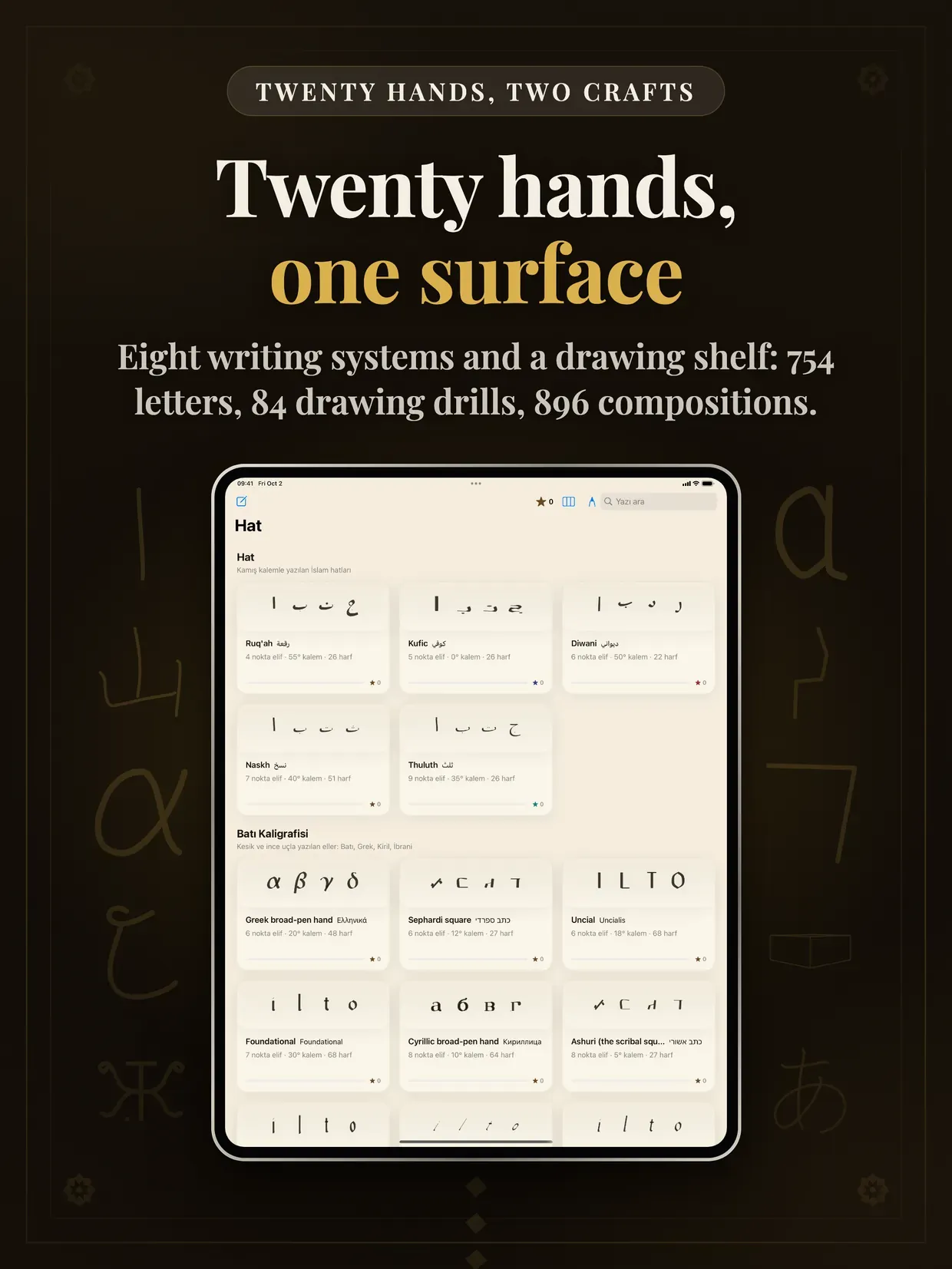
Hat teaches the shaped hands — Islamic calligraphy first, the world's other pen hands after it — on iPhone and iPad with Apple Pencil.
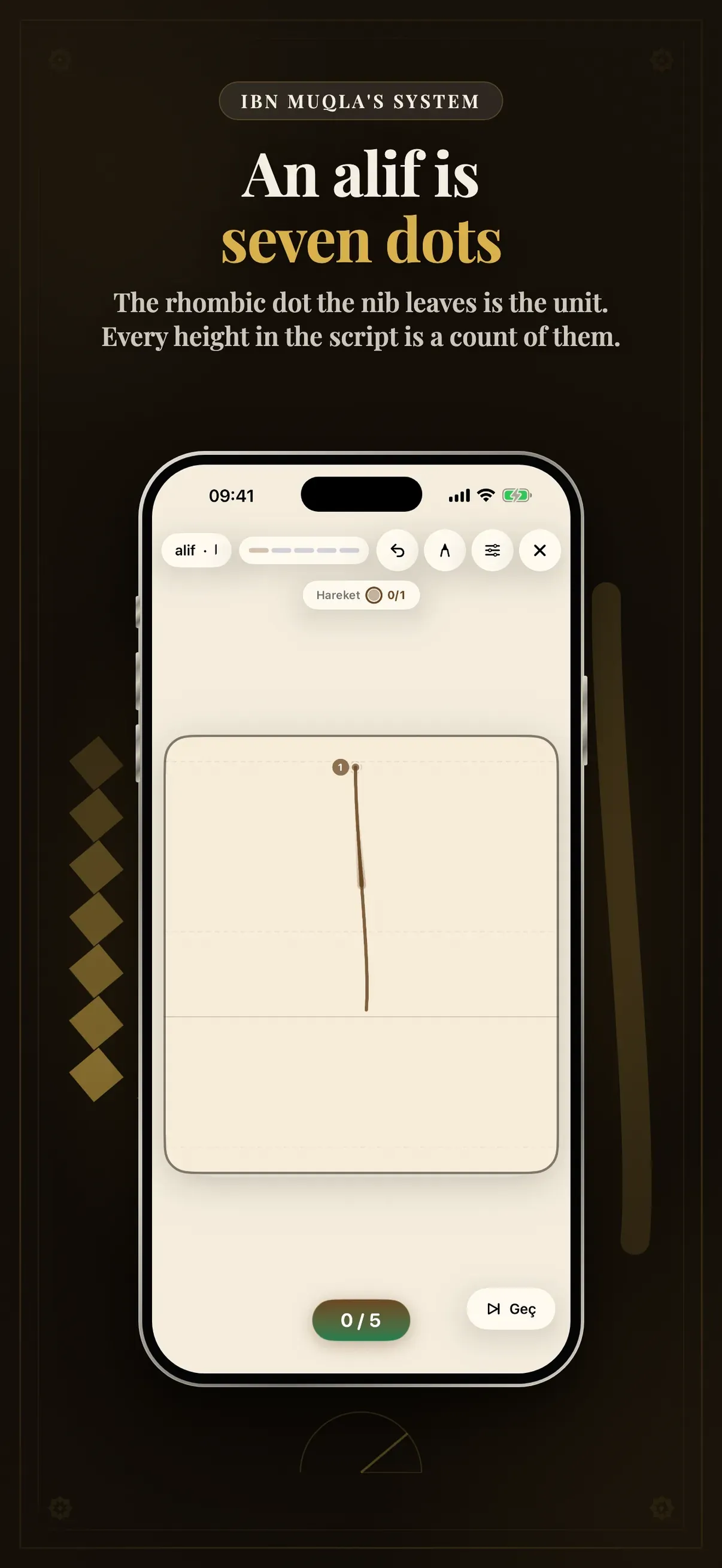
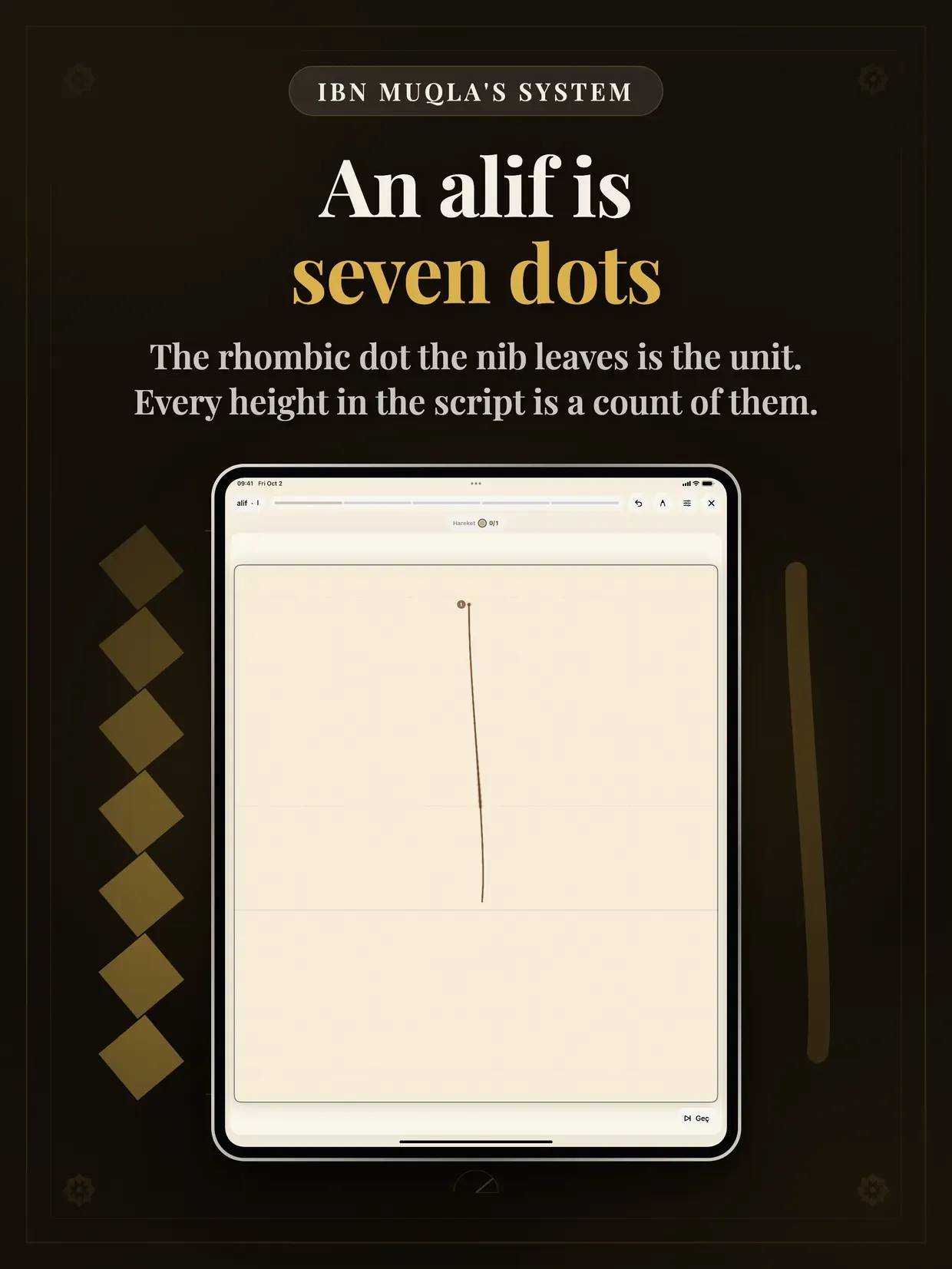
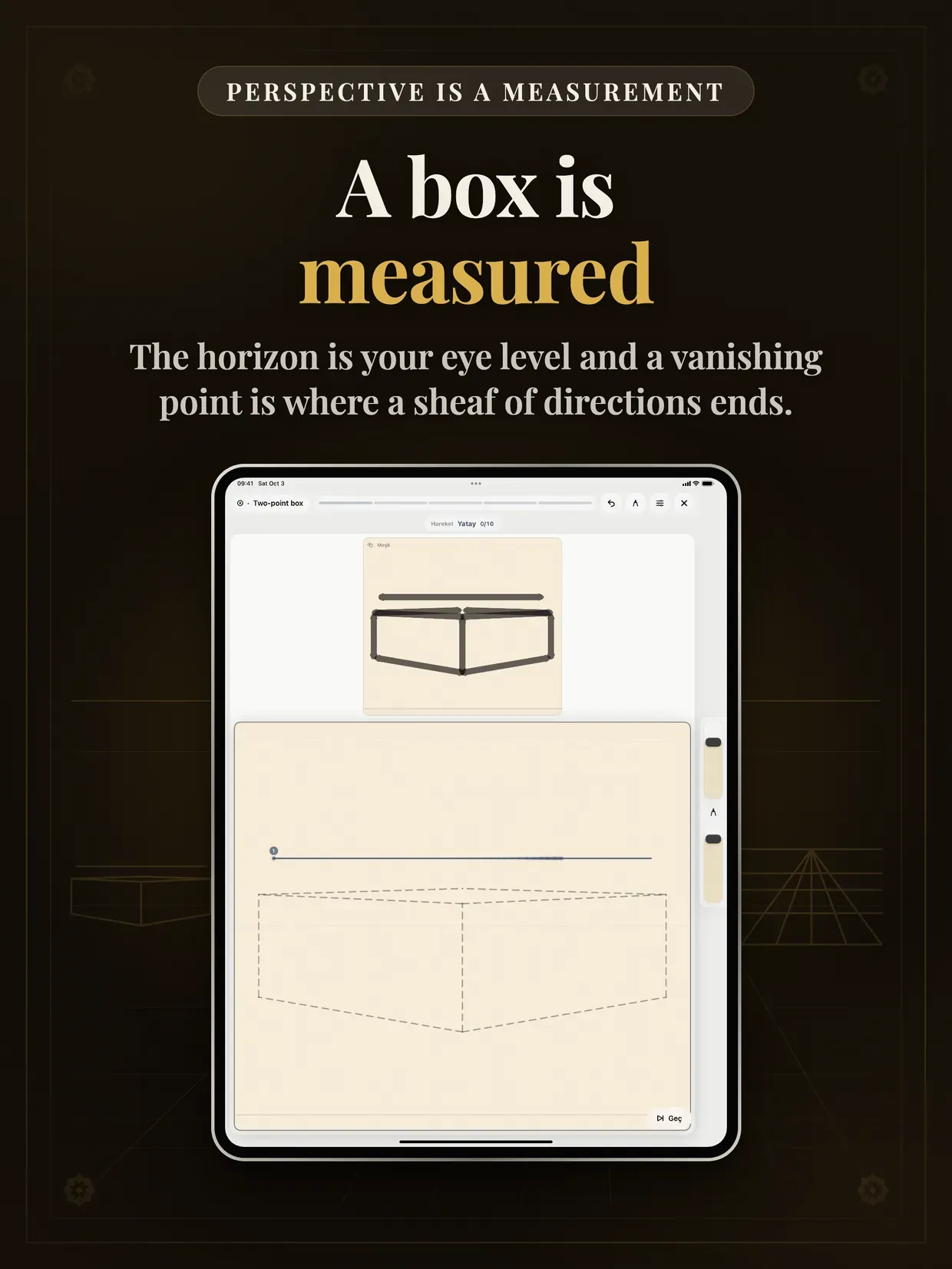
A hand is a pen held at one angle and a system of proportion. The pen never turns: a stroke is thick or hair-fine because of where it is going relative to the cut. The proportion is counted in nuqta — the rhombic dot the nib leaves when pressed once — and every height in the script is a count of them. Hat is built on those two facts and scores your hand by them.
18 HANDS, 8 WRITING SYSTEMS, 1,161 LETTERS
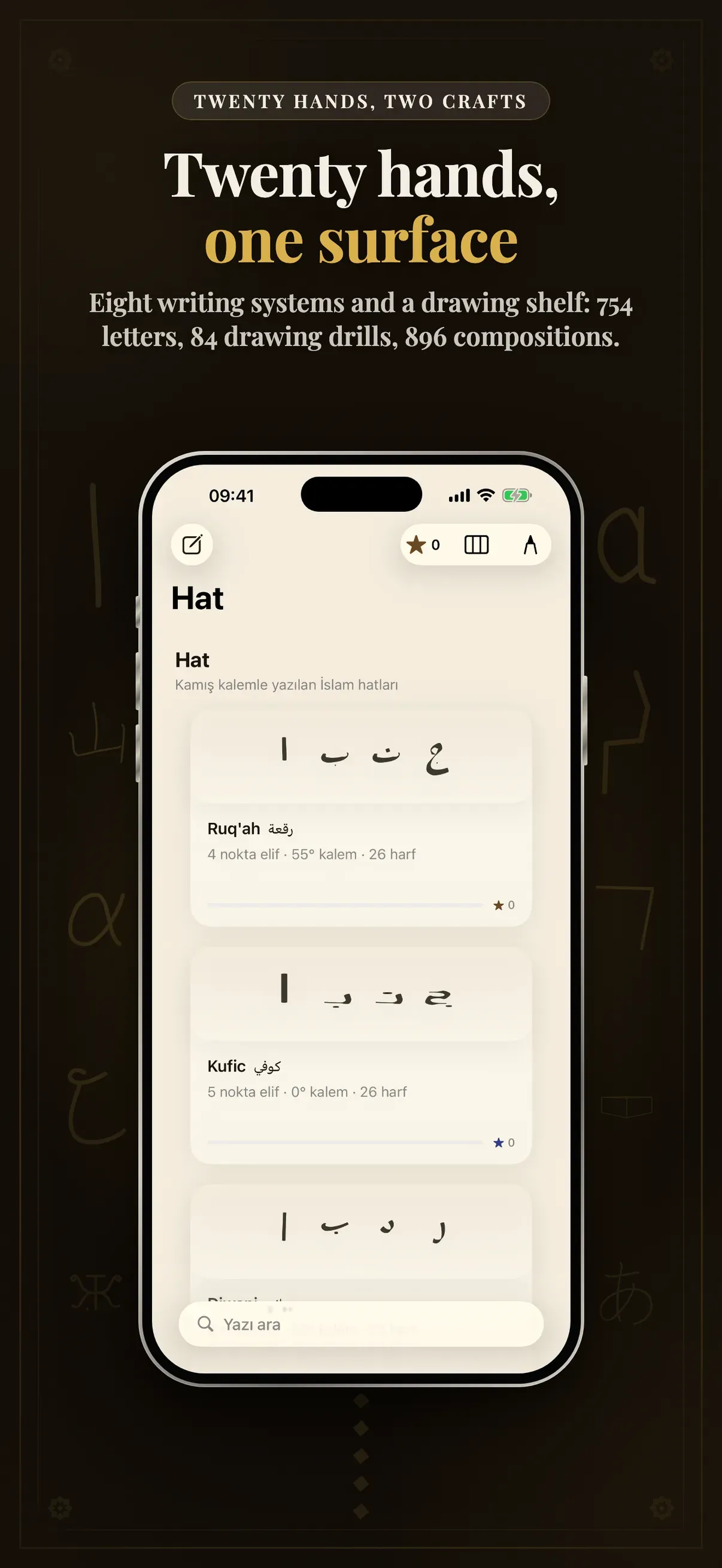
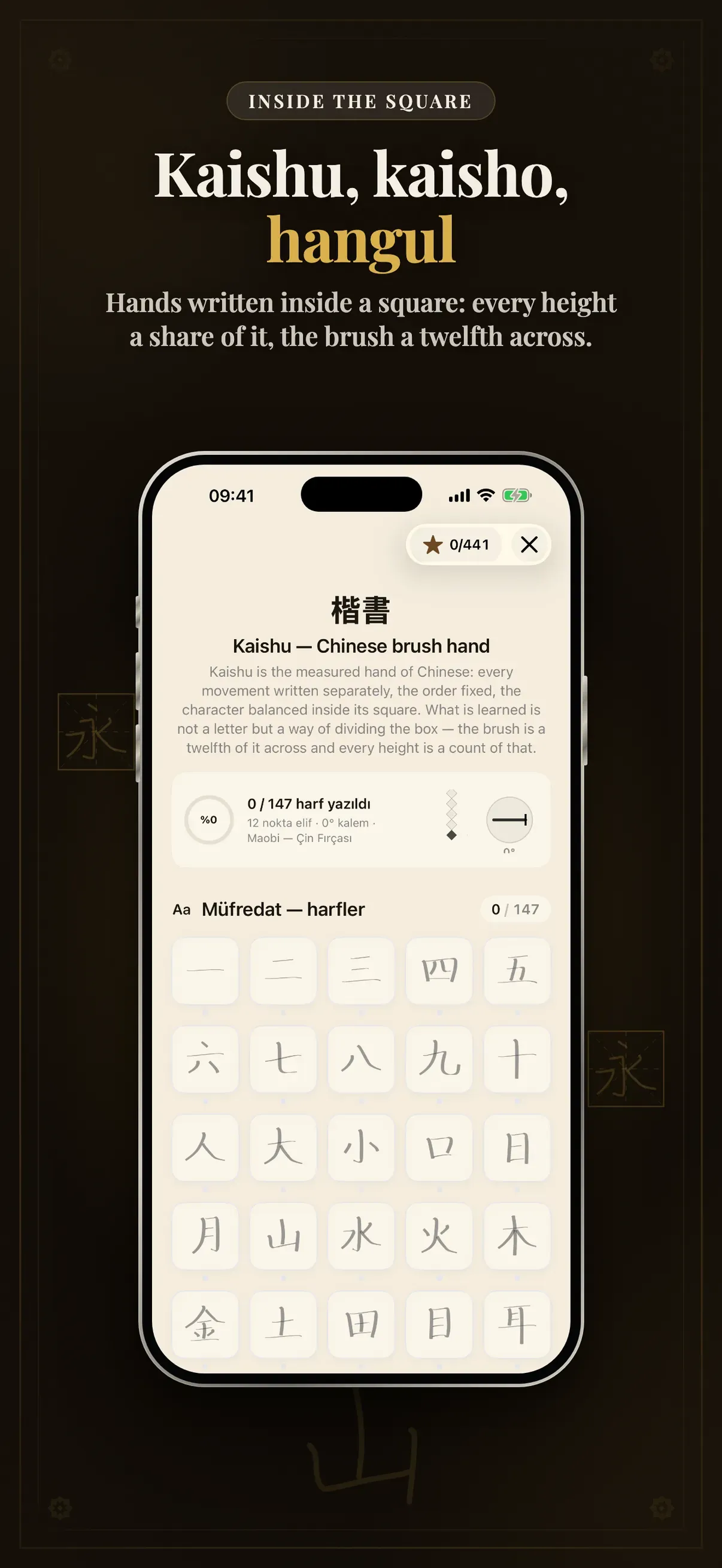
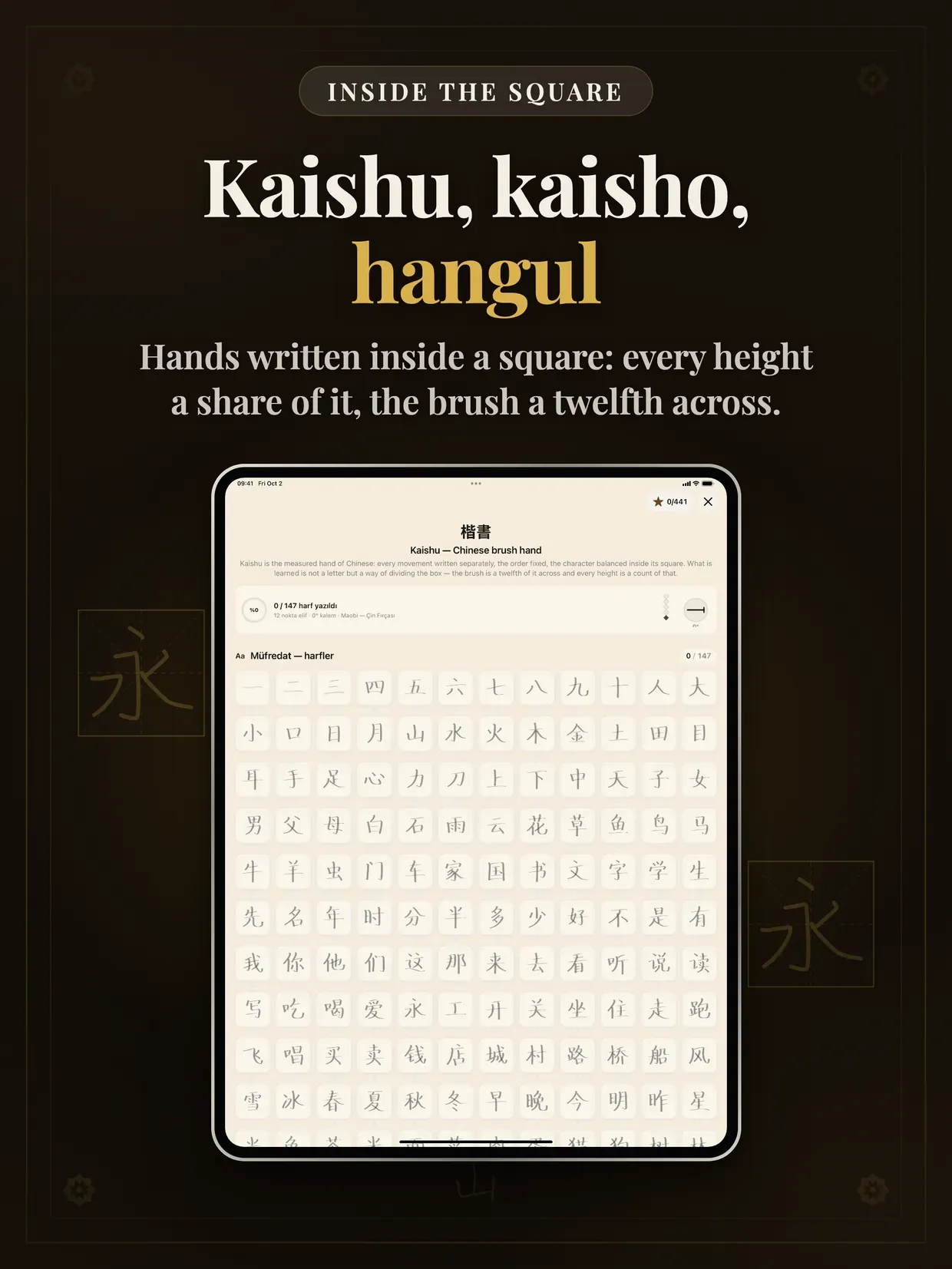
Arabic: naskh, thuluth, kufic, ruqah, diwani — 151 letters, the Ottoman پ چ ژ گ ڭ and the hamza carriers included. Latin: foundational, italic, textura, uncial, copperplate. Greek, Cyrillic, Hebrew (ashuri, sephardi), Chinese kaishu, Japanese kaisho, Korean panbonche and gungche.
902 COMPOSITIONS — THE ART, NOT JUST THE ALPHABET
A letter written alone is the opening exercise. The art is what follows: letters joined into a word, words set into a line and balanced on the page, a whole text carried at one hand. Hat ships 240 single letters, 240 joined words, 280 composed lines, 96 full pages, 40 mirrored müsennâ and the six parts of a tuğra — 20,017 strokes, each in writing order.
THE EXEMPLAR IS WRITTEN, NOT DRAWN
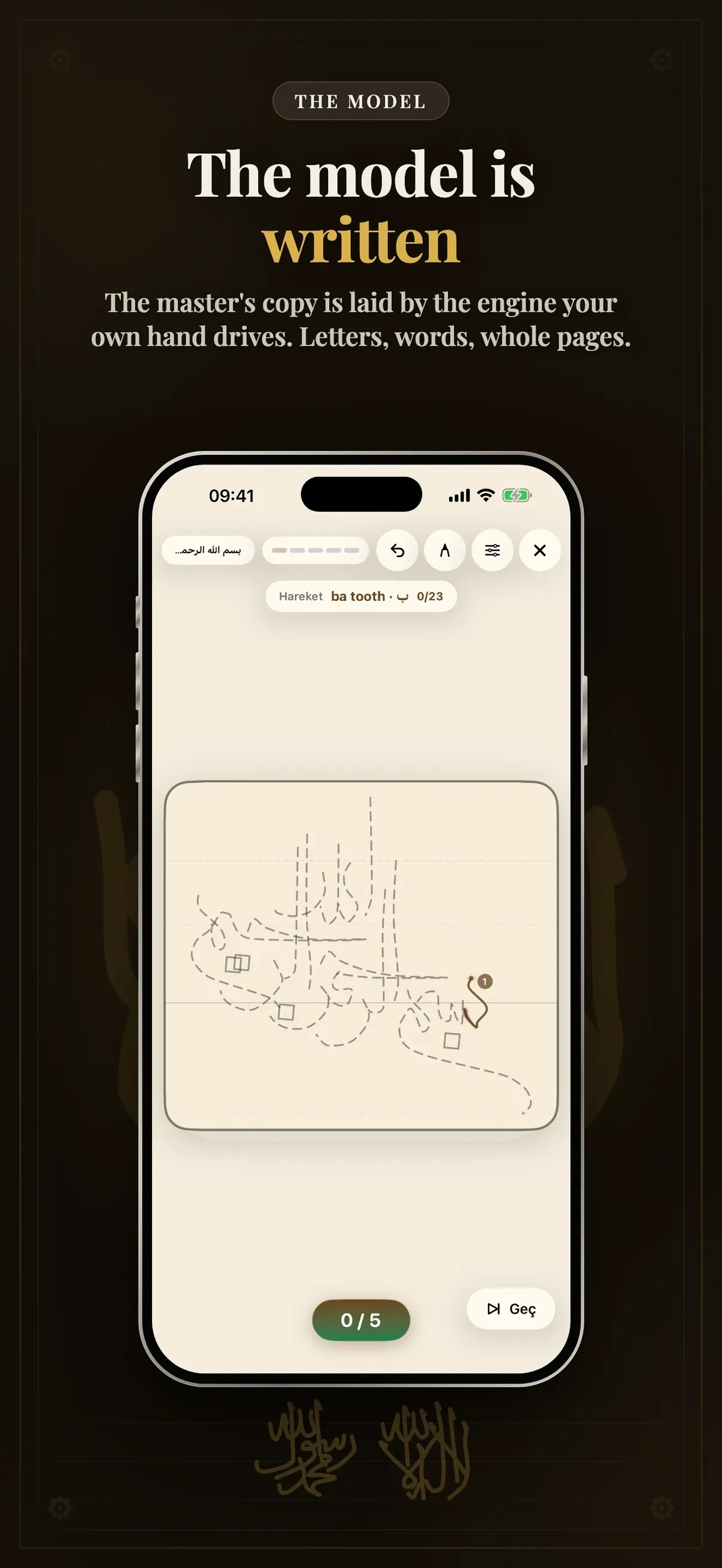
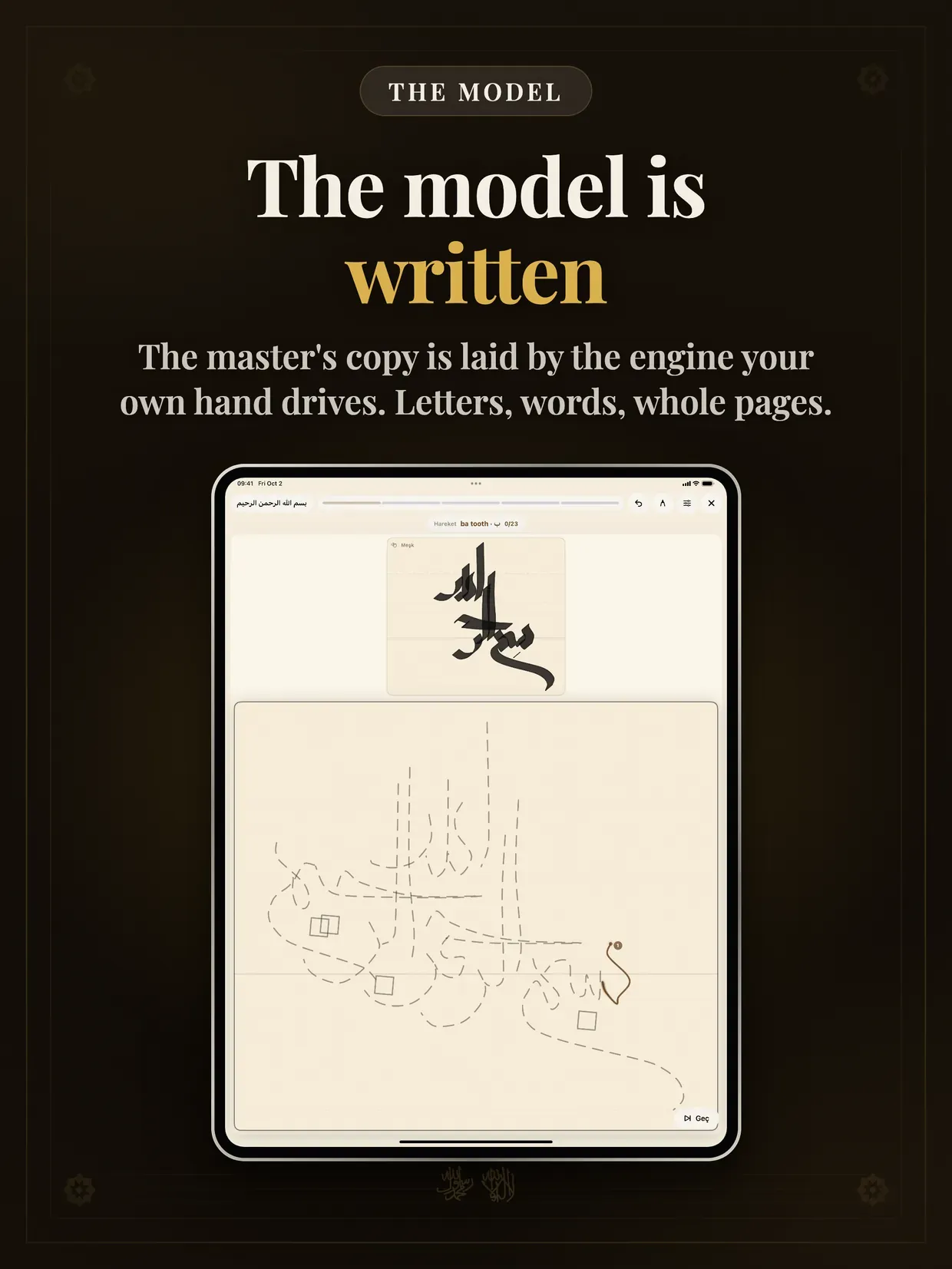
The model letter is laid down by the same ink engine your own hand drives: wet ink, a cut that sweeps, a nib that thins when it turns. There is no picture of a letter anywhere in this app, because a picture cannot teach a cut.
SCORED IN NUQTA, NOT IN PIXELS
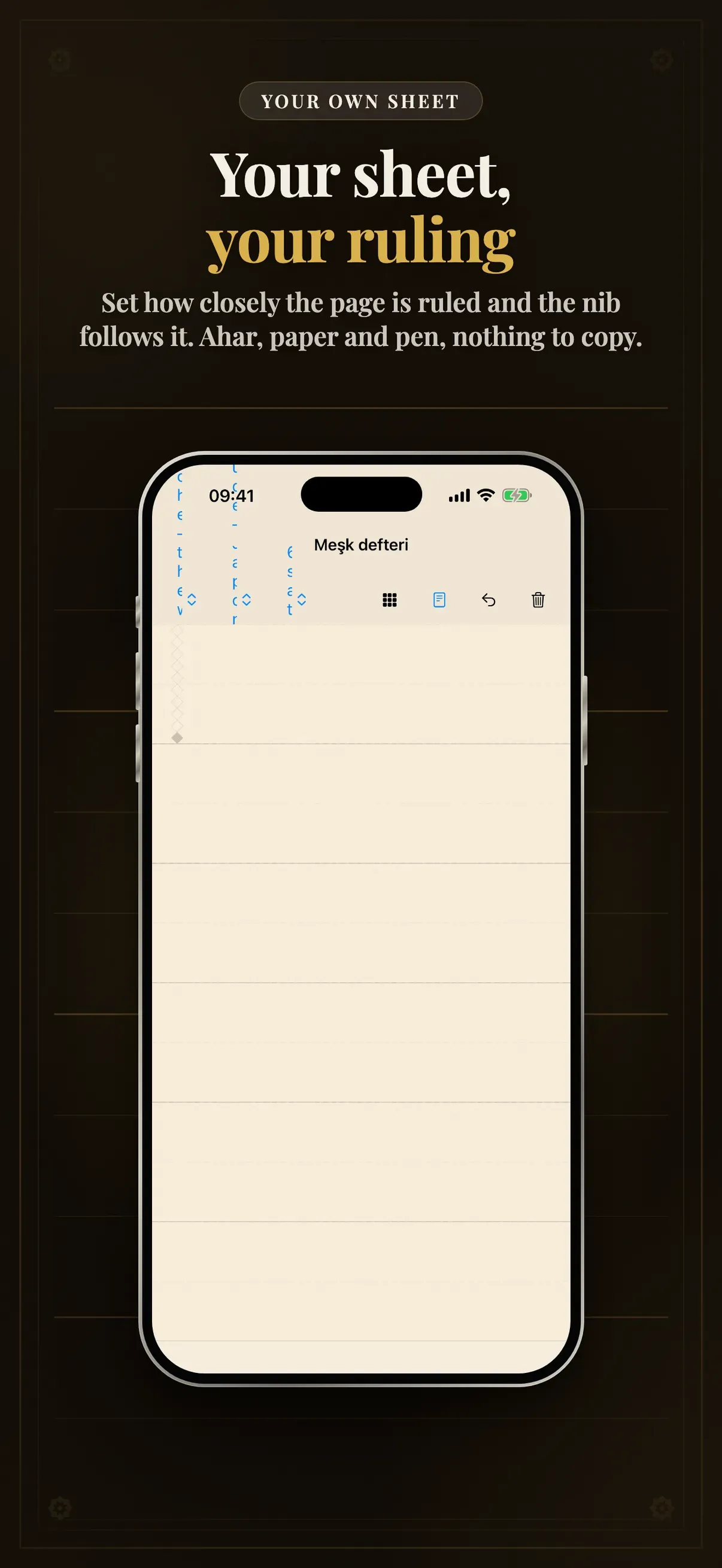
Shape and direction are the mark; position and size are gates. Every tolerance is stated in the letter's own dots, so a six-nuqta hand and a nine-nuqta hand are judged by their own standards.
AN EXAM, AND FIFTEEN CHALLENGES
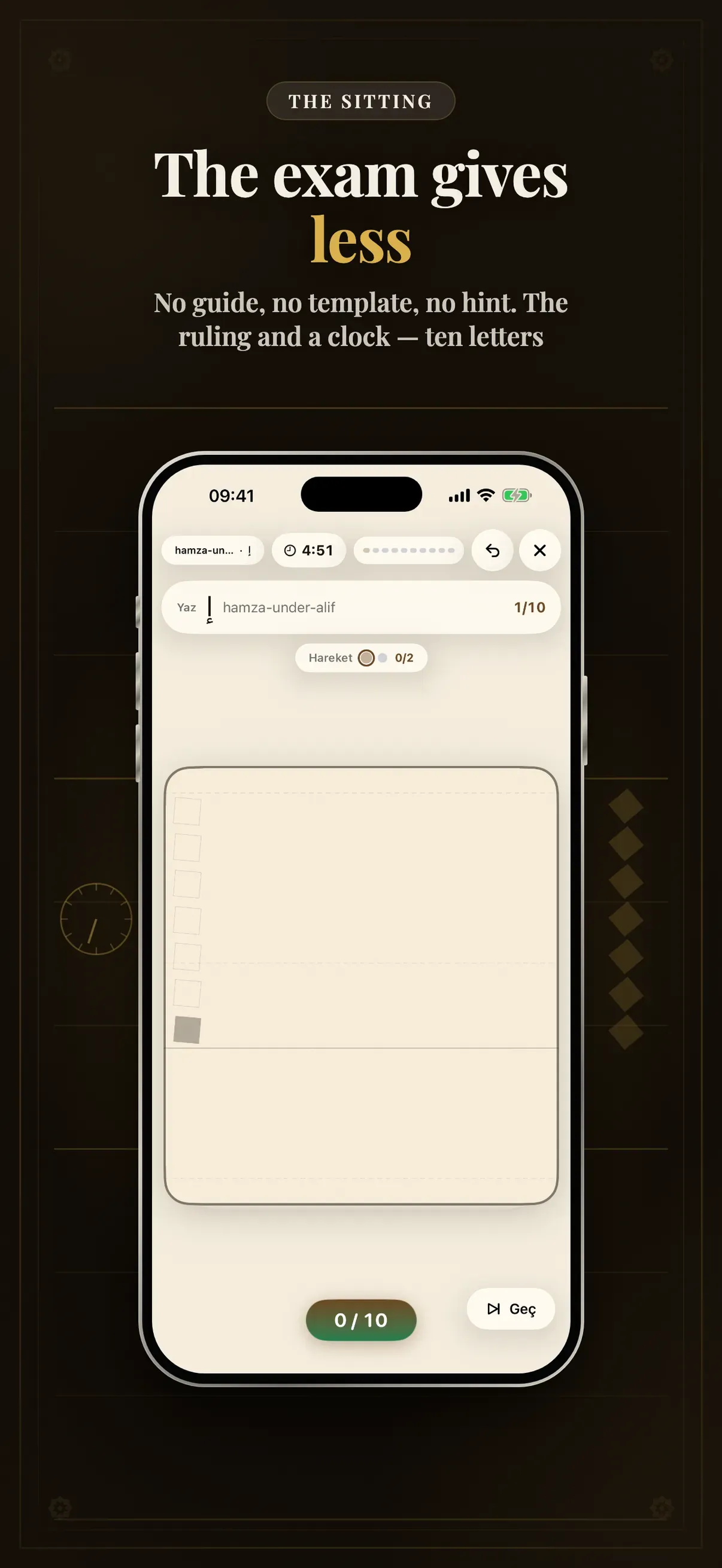
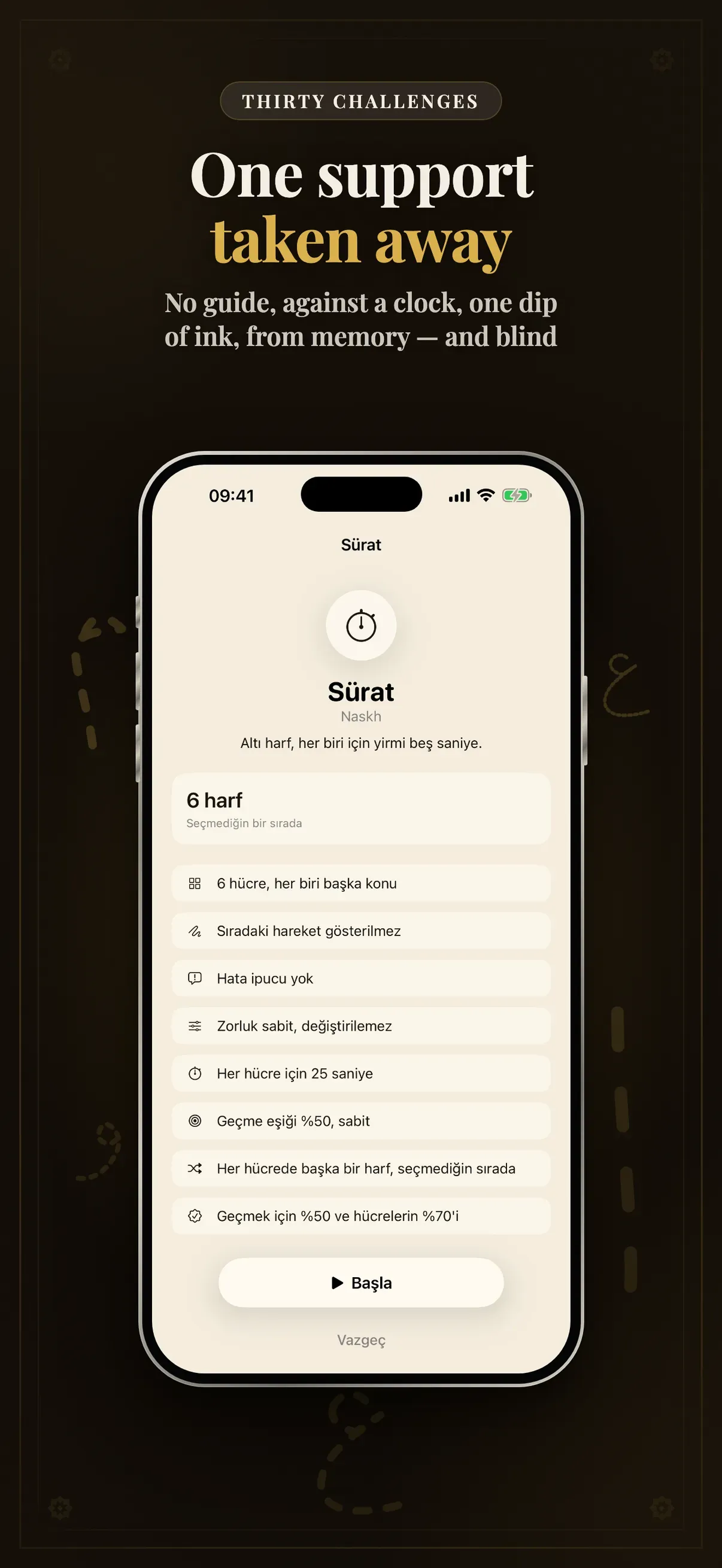
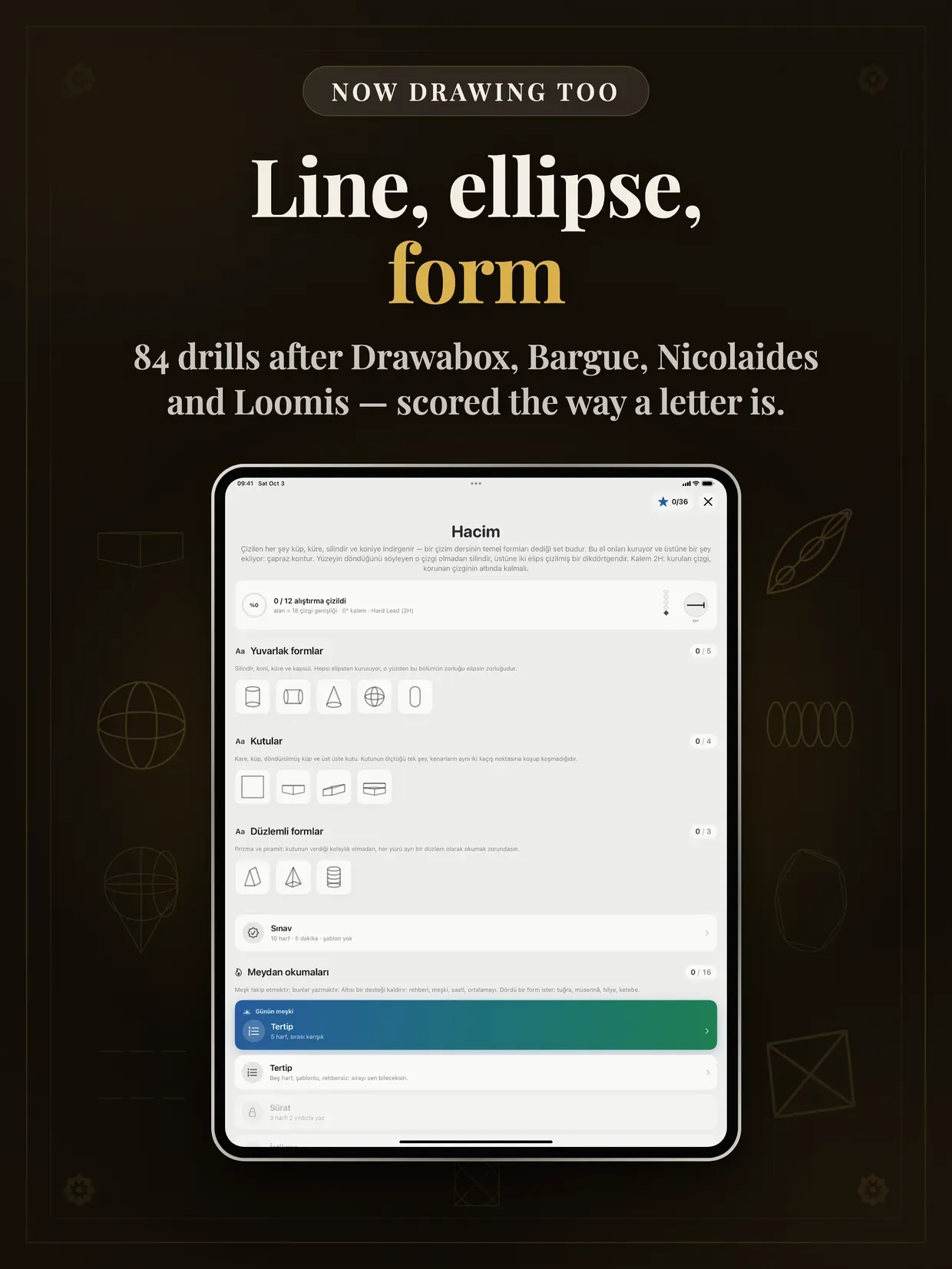
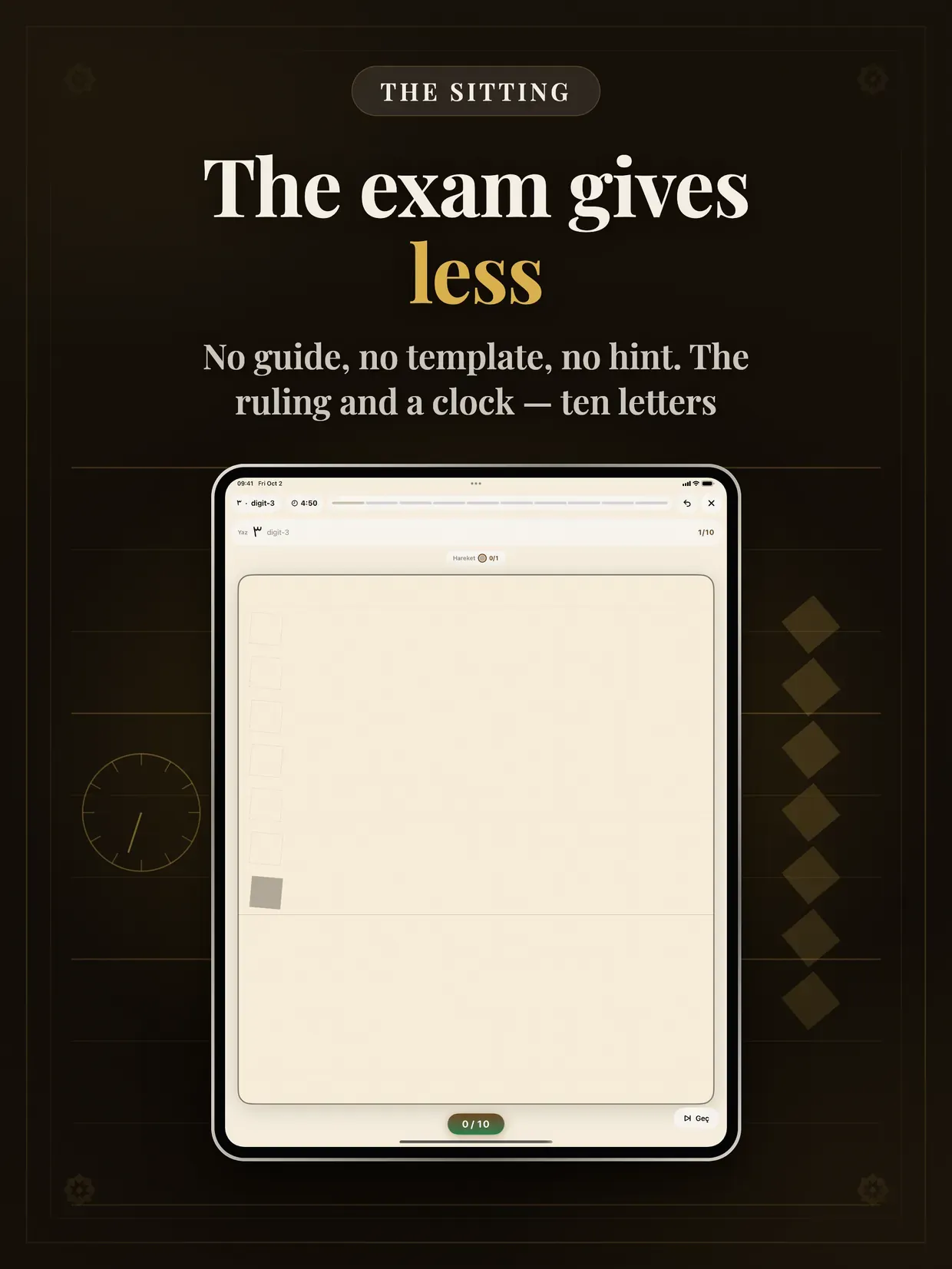
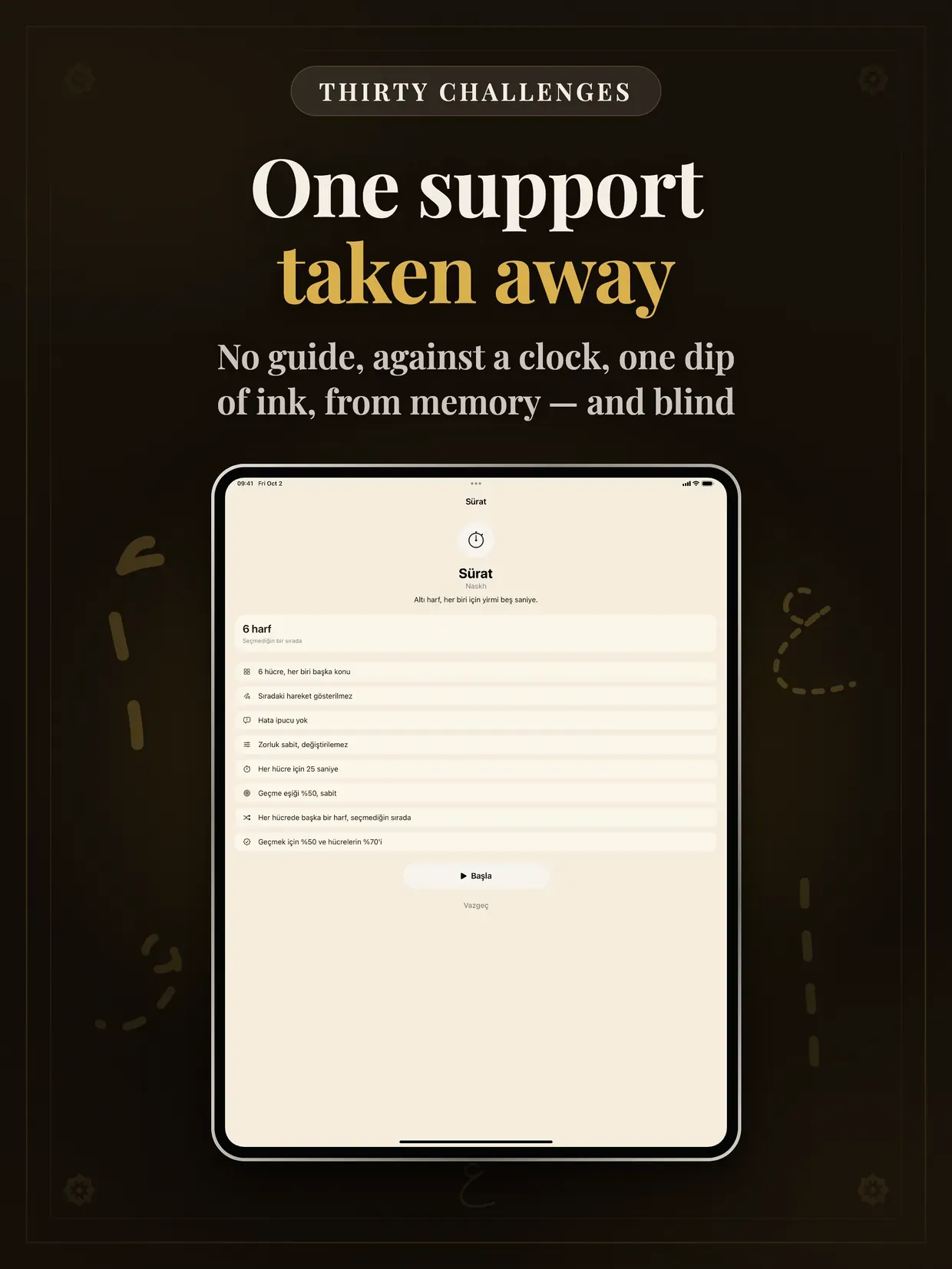
The exam is the same sheet with less given: no copy at the head of the line, no template under the pen, a clock, and letters in an order you did not choose. Eleven challenges each take one support away — no guide, a clock per cell, eight cells where the worst one is your mark, a letter shown once and then a bare sheet, one dip of ink, a whole composition with no undo — and four ask for an Ottoman form: tuğra, müsennâ, hilye, ketebe.
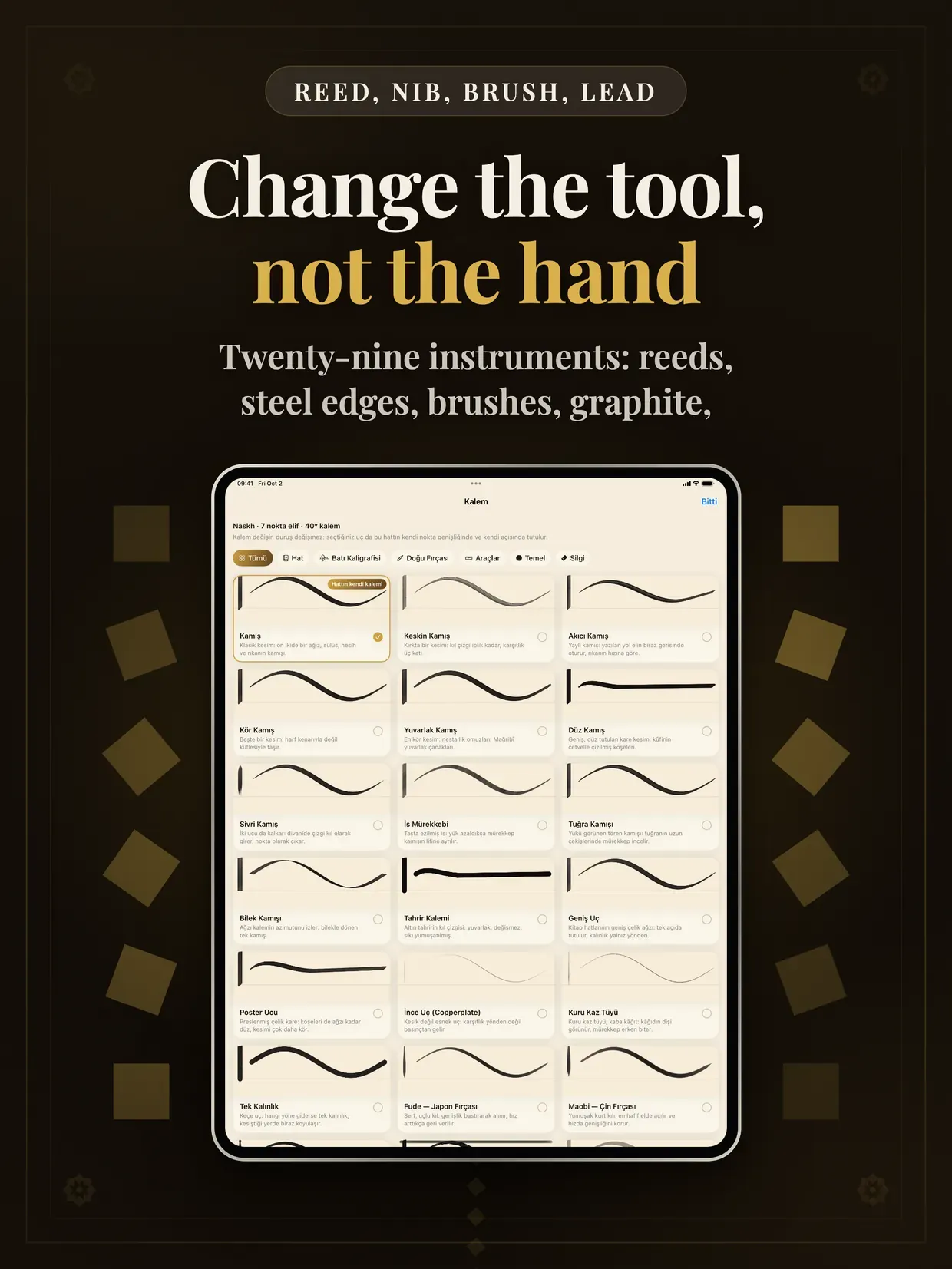
TWENTY INSTRUMENTS ON ONE SHELF
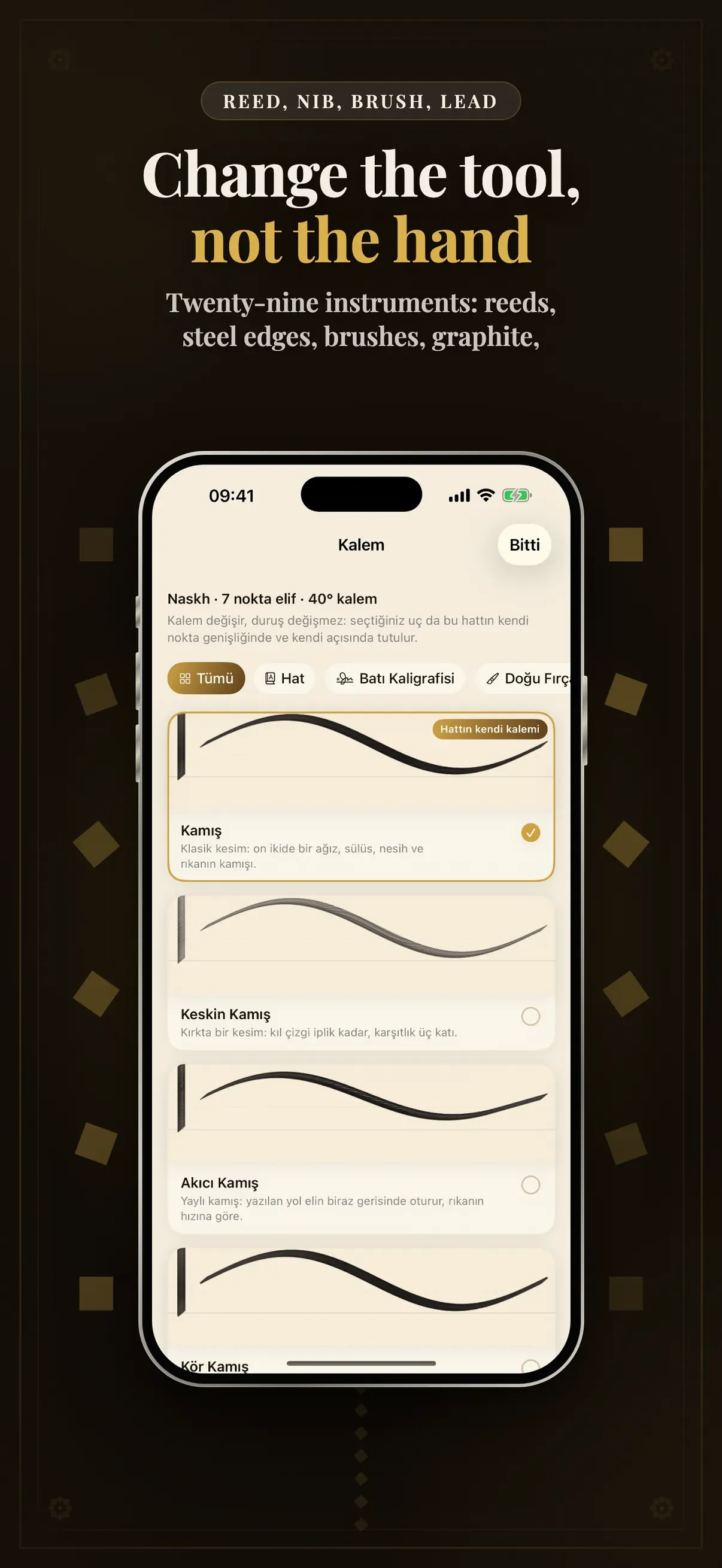
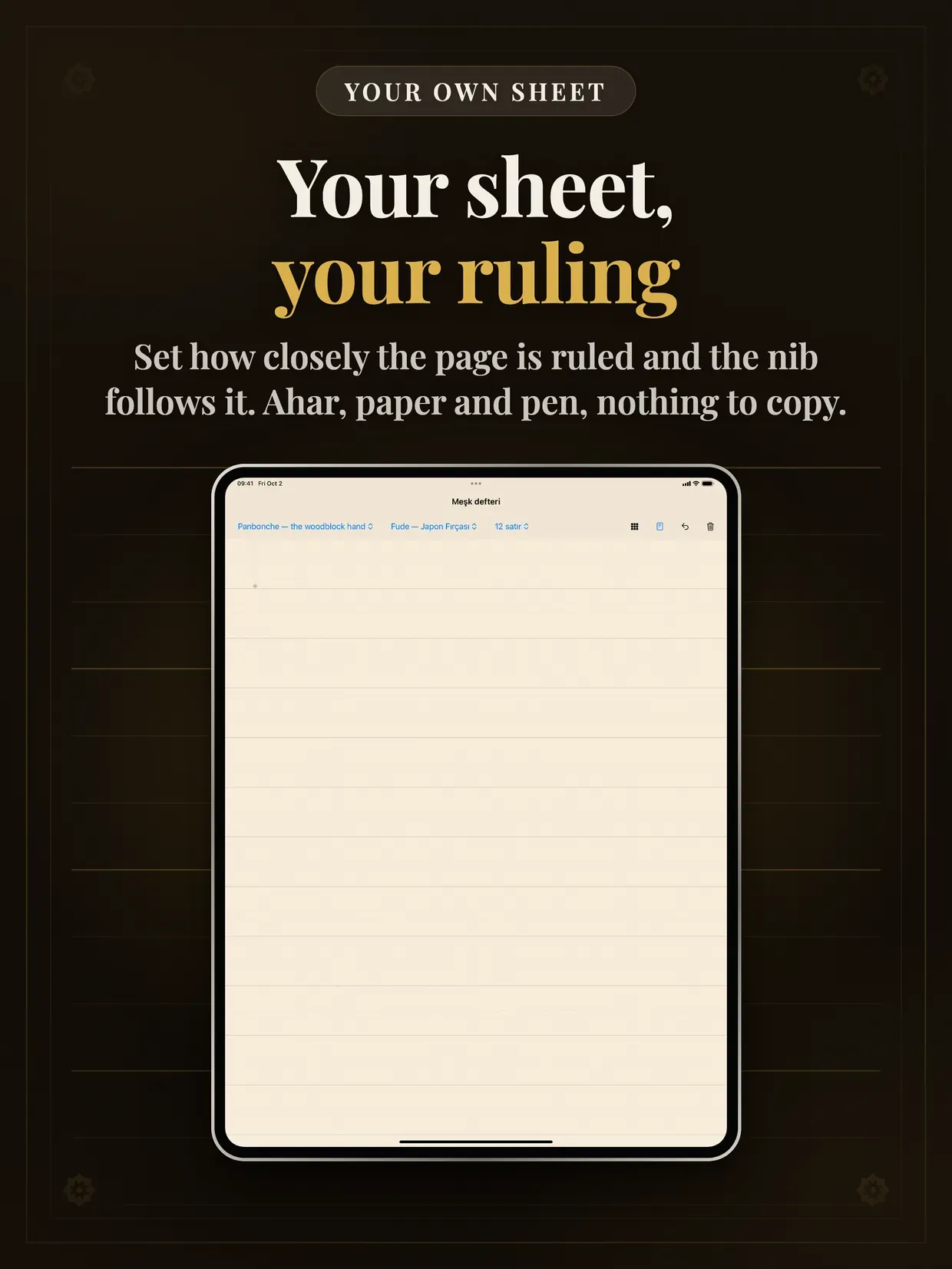
Practice naskh with a razor-cut reed, a steel broad edge, a flexible point, a dry quill or a brush. The ruling, the angle and the proportion still come from the pack, so it is still naskh: another instrument, the same hand.
BUILT FOR APPLE PENCIL
Pressure, tilt and predicted samples go straight into a Metal paint pipeline. Paper grain, a wet rim at the edge of the stroke, haptics that answer the nib. Everything runs on the device: no account, no server, nothing downloaded.
HONEST ABOUT WHAT IS FINISHED
Naskh ships the full Ottoman elifbâ at 51 letters; thuluth, kufic and ruqah carry 26 each and diwani 22 — about fifteen reviewed bodies each, plus the Ottoman letters derived from them. The rest of each Arabic alphabet still wants a hattat. The Latin, Hebrew and Korean hands are authored skeletons with correct proportions whose finer detail wants a calligrapher's correction; the Greek is a draughtsman's alphabet and the Cyrillic a typeface with its serifs stripped. Every pack says exactly that in its own review block, inside the app. We would rather ship fifteen right letters than a full but false alphabet.
The interface is in Turkish for now; English and Arabic next.
FREE AND FULL ACCESS
Free: all eighteen hands open, and in each the first five letters of its own teaching order — plus the first two of every named run — on that hand's ruling, with its reed and its exemplar. Full access opens the rest of every alphabet, all 902 compositions, the words, the exam, the fifteen challenges and the pen shelf.